Reference · Solfeggio and music theory

Solfeggio

34articles 7sections 0linked exercises
♪Basic cadencesChords♪The circle of fifthsKeys and tonalities♪Diatonic intervalsIntervals♪Melodic dictationSolfeggio and ear training♪Phrases and periodsForms and practice♪Seventh chordsChords♪Sharps, flats and naturalsNotation basics♪Articulation and pedalForms and practice♪Chords and arpeggiosChords♪How to structure piano practiceForms and practice♪Dotted notesRhythm and meter♪First ear-training exercisesSolfeggio and ear training♪Ledger linesNotation basics♪Rhythmic dictationSolfeggio and ear training♪A sight-reading routineForms and practice♪Solfeggio and scale syllablesSolfeggio and ear training♪Staff lines and spacesNotation basics♪Syncopation basicsRhythm and meter♪Whole steps and half stepsKeys and tonalities♪Arpeggios and broken chordsChords♪Chord inversionsChords♪Interval inversionsIntervals♪Recognizing intervals by earIntervals♪Key signaturesKeys and tonalities♪The major scale and its stepsKeys and tonalities♪Natural, harmonic and melodic minorKeys and tonalities♪Rests and silence in musicRhythm and meter♪Rhythm and note valuesRhythm and meter♪Simple intervalsIntervals♪Time signatures: 2/4, 3/4, 4/4 and 6/8Rhythm and meter♪Triads and chord qualitiesChords♪Treble clef, bass clef and middle CNotation basics♪How to read the grand staffNotation basics♪Note names on the keyboardNotation basics
Level All BeginnerContinuingAdvanced
Beginner routeNotes→Rhythm→Keys→Intervals→Chords→Ear
CatalogKeys and tonalities

The circle of fifths
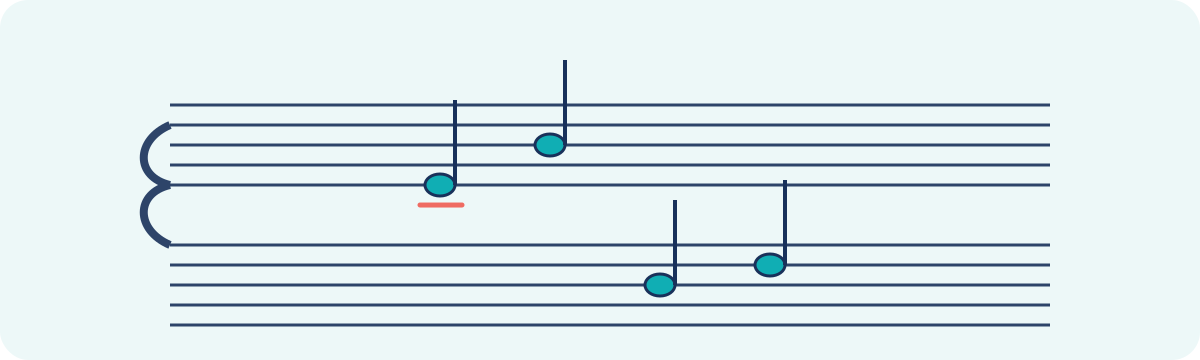
Grand staff
Grand staff

The circle of fifths

The circle of fifths maps relationships between keys and the order in which sharps and flats appear. Neighboring positions are a fifth apart.

Use the circle as a map

The circle does not replace ear training or scale knowledge, but it shows connections. Moving through sharp keys adds sharps; moving through flat keys follows the reverse order.

Practice

  • Find C major with no sharps or flats.
  • Move up by a fifth.
  • Compare the new key and its number of key signatures.

Start slowly and use your ear to check what you have read.

Sources and licenses

  • Open Music Theory, Version 2 — Virtual Library of Virginia / contributing authorsCC BY-SA 4.0; adapted explanation with attribution
  • Theory Lessons — musictheory.netExternal reference; no text or images copied

Found an inaccuracy?

Sign in to suggest a correction and save reading progress. Sign in