Reference · Solfeggio and music theory

Solfeggio

34articles 7sections 0linked exercises
♪Basic cadencesChords♪The circle of fifthsKeys and tonalities♪Diatonic intervalsIntervals♪Melodic dictationSolfeggio and ear training♪Phrases and periodsForms and practice♪Seventh chordsChords♪Sharps, flats and naturalsNotation basics♪Articulation and pedalForms and practice♪Chords and arpeggiosChords♪How to structure piano practiceForms and practice♪Dotted notesRhythm and meter♪First ear-training exercisesSolfeggio and ear training♪Ledger linesNotation basics♪Rhythmic dictationSolfeggio and ear training♪A sight-reading routineForms and practice♪Solfeggio and scale syllablesSolfeggio and ear training♪Staff lines and spacesNotation basics♪Syncopation basicsRhythm and meter♪Whole steps and half stepsKeys and tonalities♪Arpeggio dan akor terurai: panduan praktisChords♪Chord inversionsChords♪Interval inversionsIntervals♪Recognizing intervals by earIntervals♪Key signaturesKeys and tonalities♪The major scale and its stepsKeys and tonalities♪Natural, harmonic and melodic minorKeys and tonalities♪Rests and silence in musicRhythm and meter♪Rhythm and note valuesRhythm and meter♪Simple intervalsIntervals♪Time signatures: 2/4, 3/4, 4/4 and 6/8Rhythm and meter♪Triads and chord qualitiesChords♪Treble clef, bass clef and middle CNotation basics♪How to read the grand staffNotation basics♪Note names on the keyboardNotation basics
Level All BeginnerContinuingAdvanced
Beginner routeNotes→Rhythm→Keys→Intervals→Chords→Ear
This material is shown in EN.
CatalogKeys and tonalities

The major scale and its steps

Scale and key degrees

The major scale and its steps

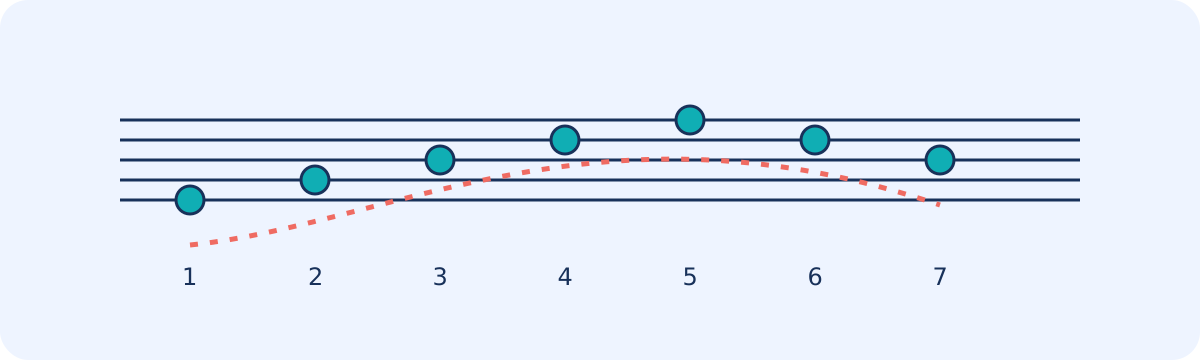
The major scale follows a sequence of whole and half steps. C major is a convenient starting point on the keyboard.

Formula

  • Whole–whole–half–whole–whole–whole–half.
  • Each degree has its own name.
  • The final note repeats the first one an octave higher.

Sources and licenses

  • Open Music Theory, Version 2 — Virtual Library of Virginia / contributing authorsCC BY-SA 4.0; adapted explanation with attribution
  • Theory Lessons — musictheory.netExternal reference; no text or images copied

Found an inaccuracy?

Sign in to suggest a correction and save reading progress. Sign in