Başvuru · Solfej ve müzik teorisi

Solfej

34makale 7bölüm 0bağlı egzersiz
♪Basic cadencesAkorlar♪The circle of fifthsDiziler ve tonaliteler♪Diatonic intervalsAralıklar♪Melodic dictationSolfej ve işitme♪Phrases and periodsBiçimler ve pratik♪Seventh chordsAkorlar♪Sharps, flats and naturalsNota yazımının temelleri♪Articulation and pedalBiçimler ve pratik♪Chords and arpeggiosAkorlar♪How to structure piano practiceBiçimler ve pratik♪Dotted notesRitim ve ölçü♪First ear-training exercisesSolfej ve işitme♪Ledger linesNota yazımının temelleri♪Rhythmic dictationSolfej ve işitme♪A sight-reading routineBiçimler ve pratik♪Solfeggio and scale syllablesSolfej ve işitme♪Staff lines and spacesNota yazımının temelleri♪Syncopation basicsRitim ve ölçü♪Whole steps and half stepsDiziler ve tonaliteler♪Arpejler ve kırık akorlar: uygulama rehberiAkorlar♪Chord inversionsAkorlar♪Interval inversionsAralıklar♪Recognizing intervals by earAralıklar♪Key signaturesDiziler ve tonaliteler♪The major scale and its stepsDiziler ve tonaliteler♪Natural, harmonic and melodic minorDiziler ve tonaliteler♪Rests and silence in musicRitim ve ölçü♪Rhythm and note valuesRitim ve ölçü♪Simple intervalsAralıklar♪Time signatures: 2/4, 3/4, 4/4 and 6/8Ritim ve ölçü♪Triads and chord qualitiesAkorlar♪Treble clef, bass clef and middle CNota yazımının temelleri♪How to read the grand staffNota yazımının temelleri♪Note names on the keyboardNota yazımının temelleri
Seviye Tümü BaşlangıçOrtaİleri
Başlangıç rotasıNotalar→Ritim→Tonaliteler→Aralıklar→Akorlar→Kulak
This material is shown in EN.
KatalogAralıklar

Diatonic intervals

Musical interval
Musical interval

Diatonic intervals

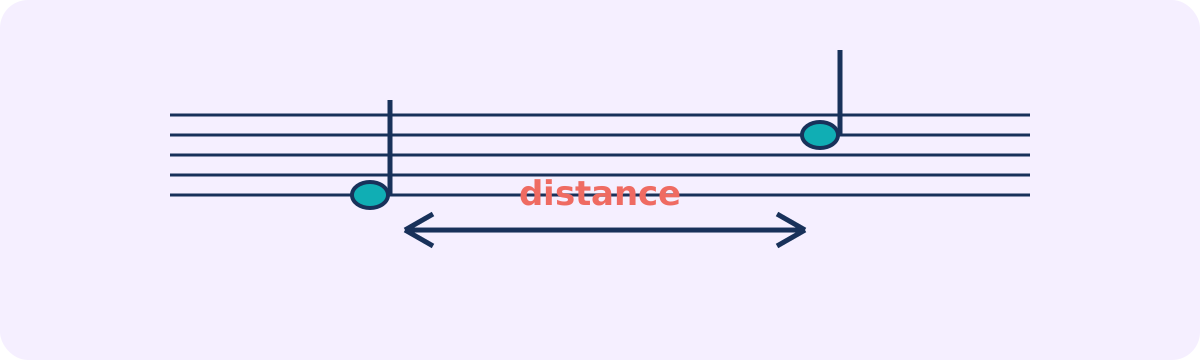
A diatonic interval is counted between scale degrees within a key. Its number comes from the number of letter names included.

Number first, quality second

C–E is a third because C, D and E are counted. After finding the number, compare semitones to identify major, minor, perfect or another quality.

Practice

  • Name both outer notes.
  • Count the letter degrees inclusively.
  • Play the interval and compare it with a known example.

Start slowly and use your ear to check what you have read.

Kaynaklar ve lisanslar

  • Open Music Theory, Version 2 — Virtual Library of Virginia / contributing authorsCC BY-SA 4.0; adapted explanation with attribution
  • Theory Lessons — musictheory.netExternal reference; no text or images copied

Bir hata mı buldun?

Sign in to suggest a correction and save reading progress. Giriş yap